

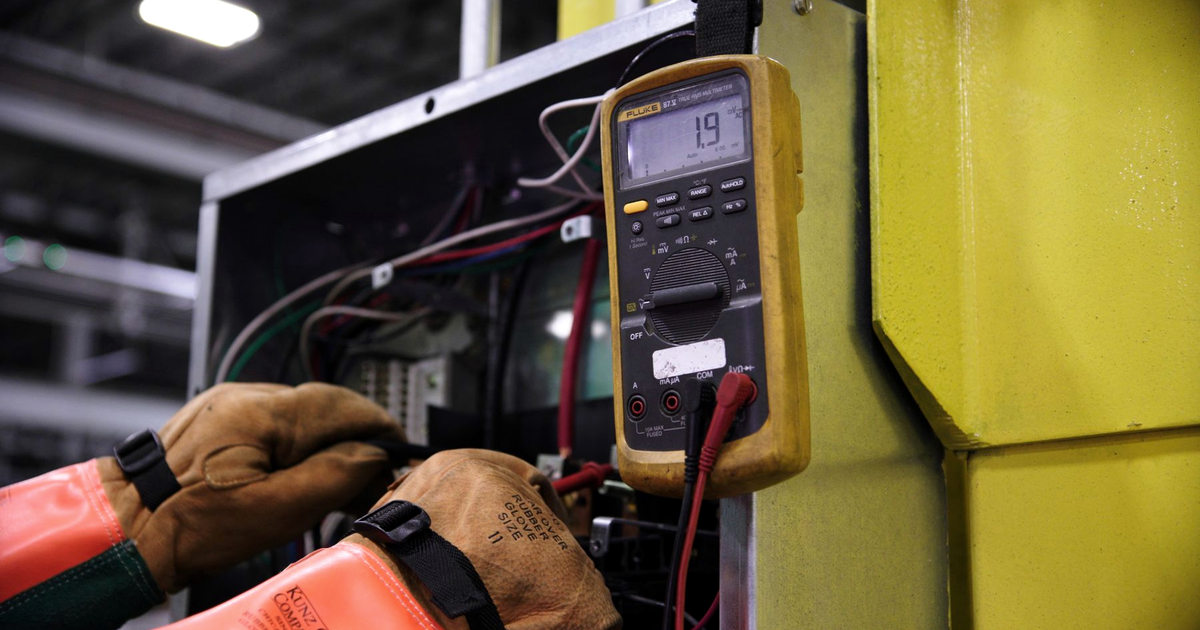
A multimeter can become one of the most useful tools an electrician owns. That does not mean every first-year apprentice should buy one before the first day.
Start with the employer’s policy
Some contractors expect electricians to provide their own meter. Others provide company meters so the shop can standardize ratings, maintenance, calibration, and approved procedures. Ask before spending money.
Know the system before choosing the meter
A meter that is appropriate for low-energy troubleshooting is not automatically appropriate for every distribution system. Before buying, understand the voltage levels, environment, measurement category, current-measurement needs, and the employer’s written procedures.
CAT rating matters
Measurement category ratings are part of how a meter is selected for the electrical environment. The number printed on the front is not the only consideration; leads, probes, fusing, maximum voltage, and manufacturer instructions matter too.
A non-contact tester is not a meter
A non-contact voltage tester is convenient for screening and troubleshooting, but it should never be treated as the sole means of proving that an electrical conductor or circuit is safe to touch.
When buying your own makes sense
If your employer expects personal meters, you understand the work you will perform, and you can select a meter with the proper ratings and functions, then buying a professional-quality instrument can make sense. A good meter is a place where reliability and protection are more important than collecting extra features.
Choose test equipment for the actual electrical environment and the employer’s procedures—not for the longest feature list.
Browse Tester & Meter Guidance →Compare tester and meter guidance before buying a meter that may not fit your work.